

For Margie Hennessey, helping homebuyers — especially those in the Deaf and Hard of Hearing (DHH) community — is far more than a job; it’s a calling shaped by her own life experience.
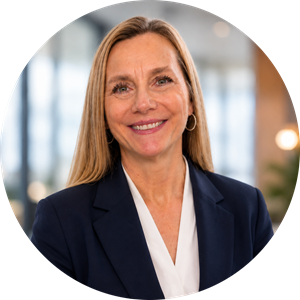
Raised by Deaf parents, Margie grew up fluent in American Sign Language (ASL). As a CODA (Child of Deaf Adult), she became deeply aware of the everyday challenges that can make important life milestones, like buying a home, feel out of reach for those in the DHH community. Today, Margie has turned that personal connection into a career devoted to opening doors for others by making the mortgage process feel accessible and empowering.
As the VP of Eastern Region Sales for Waterstone Mortgage, Margie also leads her lending team, Signing Home Loans™. She works regularly with all homebuyers — but is particularly passionate about serving those in the DHH community. Her daily interactions are more than a professional calling; they also offer a fulfilling, meaningful way to make a positive impact on the people she serves.
“Margie exemplifies what it means to lead with both expertise and purpose,” says Jeff McGuiness, Waterstone Mortgage President & CEO. “Her commitment to serving the Deaf and Hard of Hearing community isn’t just a passion — it’s a powerful extension of who she is, and it’s making a meaningful impact on the lives of her clients every day. At Waterstone Mortgage, we’re incredibly proud of the work she’s doing, and our leadership team is fully committed to supporting and expanding this important mission. Margie’s vision is helping shape a better future for our industry.”
How a Cultural Connection Turned into a Flourishing Career
Margie worked at the Tennessee School for the Deaf before venturing to Washington, D.C., where she worked as a certified ASL interpreter before realizing her passion for homeownership. Eventually, her interest in mathematics and finance led her to the mortgage industry, and she never looked back.
In those early years of her career as a loan originator, Margie immediately noticed a gap in information access for her DHH clients. In the early 2000s, smartphones didn’t exist, video conferencing technology was primitive, and most communication with DHH clients had to be conducted using ASL during in-person meetings.
To improve the mortgage lending process for individuals who were Deaf and Hard of Hearing, Margie launched an education effort — aligning herself with several local DHH associations to provide informational workshops at their events. Her goal was simple: to empower potential homebuyers by providing them with the information they needed to make the best home financing decisions for their future.
For Margie, her work also had an important personal connection, which began with her father and mother. When she launched Signing Home Loans in 2025, Margie knew it was important to honor her parents’ legacy through her work. In her own words:
“I was truly grateful to honor my parents, Clyde and Alberta Smith, with the launch of Signing Home Loans. My parents were inspirational educators, advocates, and trailblazers their whole lives. I hope to continue to carry their torches with excellence.
Alberta Smith (North Carolina School for the Deaf class of 1944; Gallaudet College — now University — class of 1950) was a dedicated Deaf educator and advocate, becoming the country’s first Deaf woman principal at the Tennessee School for the Deaf in 1977.
Clyde Smith (Tennessee School for the Deaf, class of 1960; Gallaudet College, class of 1978) led a career in Deaf education and advocacy — blazing paths in horse racing as a Deaf harness-racing driver in the 1980s. In 1994, as a licensed Deaf pilot, he was the founding President of the International Deaf Pilots Association.”
Addressing the Challenges Buyers in the DHH Community Face
As Margie describes, many in the DHH community do not consider themselves to have a disability, but instead identify as belonging to a linguistic and cultural minority; they are a group with shared experiences, challenges, and strengths that may be unique from those who are in the cultural majority (in this case, those who aren’t Deaf or Hard of Hearing).
So, when it comes to the mortgage process, those in the DHH community often have an added layer of challenges. While most people aren’t thoroughly educated on the mortgage process, those who are not Deaf or Hard of Hearing often gain knowledge through ambient hearing — whether listening to mortgage-related news on TV or overhearing conversations about home loans. This helps build their background knowledge of the subject, giving them a baseline to work from. Those in the DHH community typically don’t start with this baseline knowledge.
This is one reason why Margie is so passionate about educating all her clients — but especially those who are Deaf or Hard of Hearing. She provides them with as much information as possible, so they can weigh all their options and make an educated choice. As she explains, her goal isn’t to tell them which loan to choose; it’s to provide them with the details they need to advance their financial position and make a smart decision for their future.
Empowering Homebuyers Through Efficient Communication
While Margie brings exceptional dedication and unmatched knowledge to each one of her clients, she especially shines when serving her borrowers who are Deaf or Hard of Hearing.
As Margie explains, ASL is a high-context language (with its own grammar, vocabulary, and syntax, which is different from spoken English). Growing up among the ASL community helped her become proficient in communication, in general, and she has an exceptional ability to recognize details while communicating.
To help address some of the challenges faced by her clients in the DHH community, Margie has established effective methods of communication. For instance, her borrowers don’t have to rely on an ASL interpreter, which can be costly. Many of her interactions with DHH clients are conducted through video; she sometimes records brief video messages for information that doesn’t require extensive explanations and sends the videos via email or text message. For more complex or detailed conversations, she uses Zoom or video conferencing technology for a live ASL discussion with her clients.
In some cases, Margie has worked with Deaf borrowers with hearing parents who do not know ASL. The parents may have given their adult child a financial gift to be used as a down payment on the home. In this case, a video conferencing call between the borrower, their parents, and Margie is sometimes needed to confirm the source of the gift and meet mortgage regulations. During these interactions, Margie has served as an interpreter for the client and the parents, who were never able to communicate fully. Interactions like this can be powerful and meaningful for the client and are another way that Margie can effectively serve them.
Removing Homeownership Barriers for DHH Buyers
For Margie, the most rewarding part of her job is seeing her clients succeed in their homeownership goals — especially those who have multiple barriers that could discourage them from pursuing their dreams.
In one instance, Margie recalls working with a Chinese-American client who was Deaf. Chinese was her native language, and she understood Chinese sign language. Yet, the client was not entirely fluent in American Sign Language, and — as an added challenge — she was the first person in her family to buy a home in the United States. This buyer had no baseline understanding of the American mortgage process, so Margie’s effective communication strategies became even more important throughout the client’s home loan experience.
In the end, this client had an exceptional journey, thanks to Margie’s dedication. Here’s what the borrower had to say:
“As a first-time homebuyer, I was initially overwhelmed by each step of the process. After interviewing with two other mortgage lenders, I was fortunate to find that Waterstone Mortgage provided ASL support, which was a tremendous help. With Margie’s kind guidance every step of the way, I was able to navigate the process successfully. Her thoughtful support greatly enhanced the accessibility of the mortgage process, particularly through ASL interpretation and visual communication resources. Coming from an international background with no prior experience in homebuying or mortgage applications, I truly appreciated the A-to-Z support that helped me understand each stage clearly. Margie transformed what initially felt intimidating into a smooth and memorable experience. Now, I am a proud homeowner, and I couldn’t have done it without her guidance. Thank you, Margie, for everything. I am deeply grateful.”
Creating an empowering and positive homebuying experience is Margie’s top priority. Through Waterstone Mortgage, she has the ability to lend in 48 states, which means she is available to help all buyers, but especially those who are ASL fluent, throughout most of the nation.
Margie is also well-connected with financial planners, accountants, and CPAs who are members of the DHH community and are fluent in ASL, so she can recommend those professionals to her Deaf clients — creating an even more streamlined and positive homebuying experience for them.
Making the Mortgage Experience Better for the Deaf Community
Because of her personal connection with the Deaf community and her dedication to serving her clients effectively, Margie is actively involved in many non-profits and other organizations that serve the DHH community. As she explains, there are still many challenges that DHH individuals face, particularly when it comes to the homebuying process.
For instance, one hurdle that some of her Deaf clients encounter is when their title company refuses to hire an interpreter, even though it’s legally required by the Americans with Disabilities Act (ADA). In many of these cases, the title companies are simply not aware of the legal requirements, and Margie has had to step in to inform them of the correct process.
Another challenge that has come to the forefront recently involves Remote Online Notary (RON) closings — a fully virtual process for closing a home loan. Some RON vendors do not allow ASL interpreters to be included in these video conferencing closings due to security concerns. This can present a barrier for Deaf borrowers who are unable to communicate via video without ASL. Being aware of potential issues such as these, Margie often comes alongside her clients and finds creative solutions.
One key area of recent growth for Margie involves the National Association of Realtors® (NAR). She and two licensed, ASL-fluent Realtors recently met with personnel from the NAR general counsel office to discuss an important accessibility question: Should licensed Realtors® be required to provide an ASL interpreter when a client requests one?
During this conversation with NAR, Margie emphasized the value of including a diverse group of real estate professionals — especially Deaf Realtors® — to share their perspectives. She also highlighted an important consideration within the industry: for agents who sell only a small number of homes each year, the cost of hiring an interpreter may create a financial burden, whereas top-producing agents are typically better positioned to absorb that expense.
In general, Margie would love to see more members of the DHH community become professionally involved in real estate or mortgage lending careers. She believes organizations such as NAR may benefit from offering incentives or scholarships to Deaf professionals looking to enter the real estate field. Personally, Margie’s vision for Signing Home Loans is to create mortgage career opportunities for those in the DHH community.
Another Avenue for Education: Homebuying For Rookies
While Margie serves many clients who are Deaf or Hard of Hearing, she also works with homebuyers from all walks of life. Fifteen years ago, she and her husband, Sean Hennessey, started HomebuyingFORrookies™ (HBFR), a complimentary, educational workshop for homebuyers that is offered as an in-person seminar or an online class. The program also includes one-on-one consultations for those who want to dive deeper into mortgage knowledge — entirely free.
As Margie explains, the goal of HBFR is to empower those who are considering buying a home. She and Sean take a neutral, third-party approach throughout the class, focusing on education and information. HBFR helps demystify the mortgage process and presents information on a variety of loan programs, rather than advocating for one mortgage over another. The goal is to build the attendees’ confidence, so they can make strong decisions.
Over the years, the HBFR class has evolved, as technology has changed and mortgage regulations have fluctuated. But it remains a powerful resource for those who are looking to buy a home soon. The seminar has been offered in both English and Spanish, and Margie leads the ASL version.
A Mission Rooted in Understanding
At the heart of Margie’s work is a deeply personal mission: to make homeownership accessible and empowering for everyone, especially those in the Deaf and Hard of Hearing community.
Whether helping first-time buyers gain confidence, supporting families in understanding complex steps, or advocating for greater accessibility in the industry, Margie turns what can feel overwhelming into a truly memorable experience — one built on understanding, cultural connection, and the belief that everyone deserves a place to call home.